- August 13, 2026
- by Editor
- Marketing
- 0 Comments
Why Most Startup Marketing Checklists Fail
Search “digital marketing checklist for startups,” and you’ll find lists with 30, 40, sometimes 50 items: SEO, social media, email, paid ads, influencer outreach, PR, all presented as equally urgent from day one. For a startup with limited time and money, that’s not a checklist; it’s a way to burn out before launch, spreading thin effort across everything and building real momentum in nothing.
Here’s a shorter, sequenced list of what actually moves the needle early on, organized by what needs to happen first rather than everything that could theoretically be done.
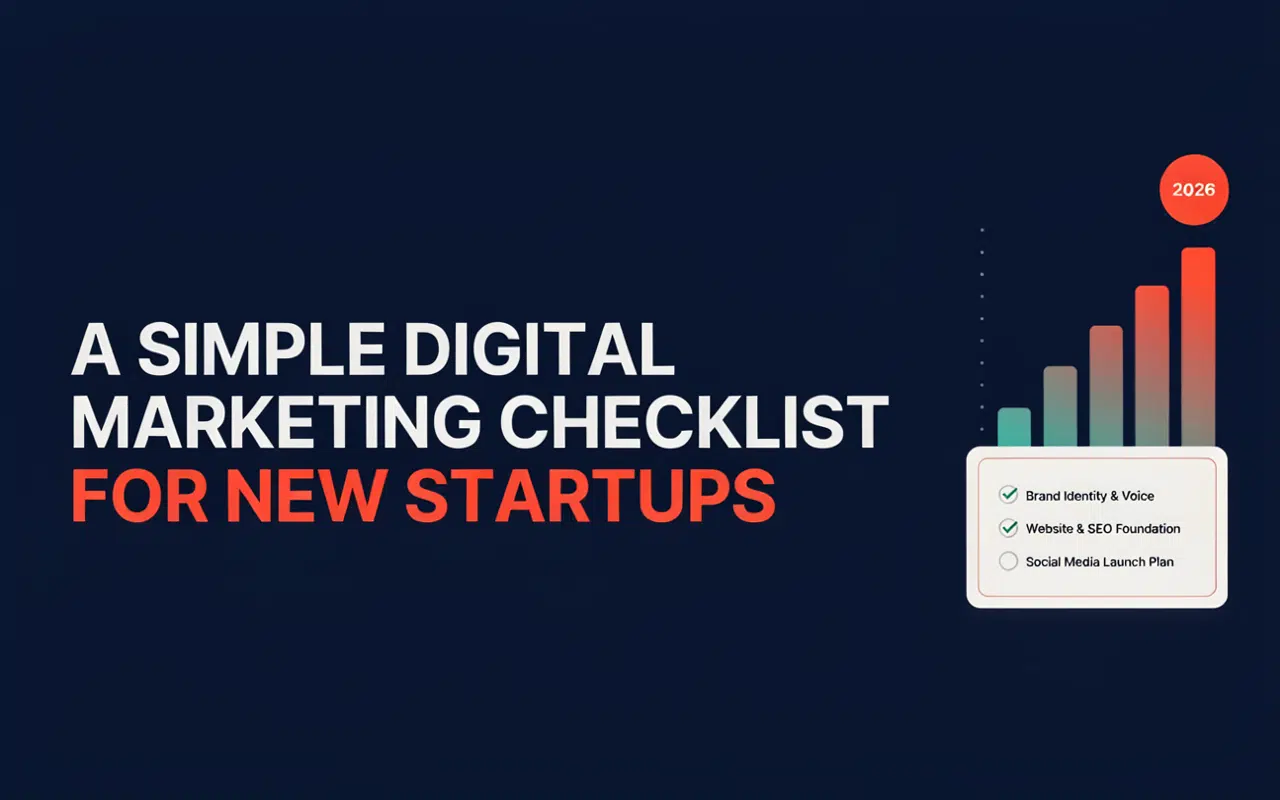
The 10-Item Checklist
Foundation
- Set up a fast, mobile-friendly website. This is your home base; every other channel exists to drive traffic here, so a slow or broken site undermines everything built on top of it.
- Claim and optimize your Google Business Profile. Free, fast to set up, and critical if you have any local customer base at all, even for an online-first startup with a physical office.
- Install basic analytics (GA4). You can’t improve what you don’t measure; set this up before spending a single dirham on marketing, so every early decision is grounded in actual data rather than guesswork.
- Define your ideal customer in one sentence. Vague targeting wastes budget across every channel that follows; a specific, written description of who you’re for keeps every later decision anchored to something real.
Visibility
- Publish three to five core pages with real keyword targeting. Homepage, about, services or products, and contact — written for the actual terms customers search, not just internal company language that means nothing to a first-time visitor.
- Pick one social platform and post consistently. Trying to be everywhere at once early on spreads effort too thin to build any real presence — choose where your specific customers actually spend time and commit there first.
- Set up a simple email capture. Even a basic newsletter signup starts building an owned audience from day one, one that doesn’t disappear if a social platform’s algorithm changes or an ad account gets restricted.
Conversion
- Add clear calls-to-action everywhere. Every page should tell visitors exactly what to do next: book a call, buy, sign up, since ambiguity at this stage quietly costs conversions that good copy and design would otherwise capture.
- Collect your first five to ten customer reviews. Social proof does more for conversion at this early stage than most paid advertising, particularly for a brand-new business with no established reputation yet.
- Test one small paid campaign. A modest AED 500–1,000 test campaign teaches you more about what messaging actually works than months of internal guessing and debate ever will.
What to Skip in Your First 90 Days
Don’t invest early in large-scale link building, since you don’t have enough content yet to make it genuinely worthwhile, and early link building without substance to back it up rarely produces lasting value. Influencer partnerships are typically expensive and hard to measure before your brand has any real traction or proof points to offer a partnership.
Avoid trying to maintain a presence across many social platforms simultaneously — it’s consistently better to do one platform well than five platforms poorly, especially with the limited time a startup team actually has. And hold off on elaborate marketing automation until you have enough customer data flowing through your systems to make sophisticated segmentation and triggers actually useful, rather than building complexity around an audience too small to benefit from it yet.
Budget Allocation Example for a Lean Startup
For a startup with a modest monthly marketing budget, say, AED 3,000–5,000, a reasonable early split looks like: 40% toward website and basic SEO fundamentals, 30% toward a small, focused paid ad test, 20% toward content and social creation, and 10% toward tools like analytics and an email platform.
This allocation shifts meaningfully over time: once you know which channel is actually converting, you reallocate more heavily toward it rather than sticking rigidly to an initial split that made sense only before you had real performance data to work from.
A Realistic 90-Day Sequence
Rather than trying to do all ten checklist items simultaneously in week one, sequencing them tends to produce better results. In the first two to three weeks, focus entirely on the foundation items — website, analytics, Google Business Profile, and defining your ideal customer — since everything else depends on these being solid first. Weeks four through eight shift toward visibility: publishing core pages, establishing your chosen social platform, and setting up email capture. The final stretch of the first 90 days focuses on conversion: tightening calls-to-action, actively collecting early reviews, and running that first small paid test once there’s enough on the site worth sending traffic to.
This sequencing matters more than most startups expect — running paid traffic to a site without clear calls-to-action or any social proof yet often wastes budget that would have converted far better just a few weeks later, once the foundation is genuinely in place.
A Note on Consistency Over Perfection
One pattern shows up repeatedly among startups that get real traction from this checklist versus those that stall: consistency beats polish. A slightly imperfect website that’s live and generating leads outperforms a perfect one still being tweaked three months later. A social account posting three solid times a week for months builds more real audience than one that posted daily for two weeks and then went quiet. Treat this checklist as a starting sequence to execute imperfectly and improve over time, rather than a set of boxes to perfect before moving forward — momentum, once lost in the early months, is genuinely difficult for a small team to rebuild.
FAQ
What should a startup focus on first: SEO or paid ads?
Neither exclusively; start with website fundamentals and a small paid test to validate messaging, then build SEO alongside it once you have a clearer sense of what resonates with real customers.
How much should a new startup spend on marketing?
There’s no universal number, but many early-stage startups budget roughly 5–10% of projected revenue, adjusting as they learn which channels actually convert for their specific business.
Do I need a marketing agency from day one?
Not necessarily; many of the foundational items on this checklist can be handled in-house before bringing in outside help specifically for scaling once the basics are working.
How do I know when it’s time to move beyond this basic checklist?
Once you’re consistently converting traffic from your core channels and have reliable data on what’s working, that’s usually the signal to expand into additional channels or more advanced tactics like automation and link building.